Minor arcana · Bonds
Amends
Core
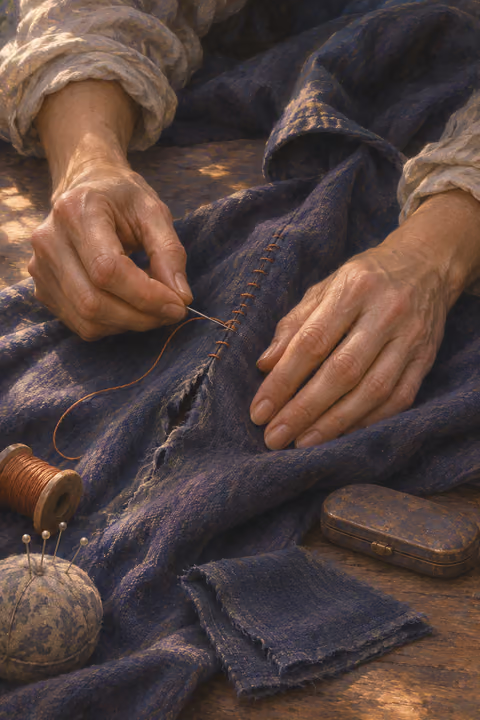
Acknowledging your mistakes helps you move forward. Forgiveness and amends begin when you look honestly at what happened and do what is still within your reach.
Adverse nuance
Guilt on its own doesn't put mistakes right. Stop punishing yourself without acting, and tell apart what you can repair from what is no longer in your control.
General reading
It's time to acknowledge a mistake and ask yourself what you can do with it. Making amends doesn't always return things to the way they were, but it can change the way you act. Honesty opens a path that guilt, turned over and over, keeps closed.
In love, it invites you to acknowledge a hurt, apologize when it's called for and respect the other person's response. At work, it favors correcting a task and owning your part without carrying every failure. With money, it asks you to look over an oversight and work out how it can be put right. In health, it points toward taking up your care again without blaming yourself for what you didn't know or couldn't do before. In the family, it lets you rethink a word or an attitude that calls for a different way of treating someone. In your studies, it helps you learn from the mistake and correct your method. In travel, it's wise to fix mistaken bookings, agreements or preparations. Take one concrete step: acknowledging is the beginning, and changing how you act is what keeps the amends going.
In the cross
What this card says in each of the five positions.
-
1 Present
A mistake needs to be acknowledged so you can go on. Look at your concrete responsibility, talk when you need to and choose an action you can take, without demanding of yourself that every consequence be erased at once.
-
2 Past
An earlier mistake or amends still owed may be affecting your question. Look at what has been acknowledged, what has really changed and what you keep repeating even though you believe you've left the matter behind.
-
3 Adverse conditions
Guilt is taking the place of amends. You may be reproaching yourself for what happened without changing how you act, or hoping an apology will wipe out every consequence. What's needed is an action in proportion, kept up over time.
-
4 Favorable conditions
Working in your favor is the ability to admit a mistake without making it your whole identity. Listening to the harm done, owning your part and acting differently let you build a more honest response.
-
5 Outcome or future
If acknowledgment comes with changes, a way to make amends may open. Trust needs actions and time; reaching out doesn't oblige anyone to restore the bond, and it doesn't guarantee that everything goes back to how it was.
Left and right
In the twelve houses only, this card changes with the side of the major arcana where it lands.
-
On the left
Contrition starts from you. In the matter of this house, you acknowledge a mistake of your own and can apologize or make amends. The reading invites you to take on a concrete responsibility, not to declare yourself guilty of everything or to demand that your apology be accepted right away.
-
On the right
Contrition comes toward you: someone else may acknowledge a wrong done in your relationship and reach out meaning to make amends. The card doesn't prove what that person thinks. Weigh words and actions, and keep your freedom to decide whether you want to take up the bond again.
-
Difficulty on the left
You stay stuck in remorse, justify yourself or apologize without changing what needs to change. Moving forward means owning your part and making the amends you can, while respecting the other person's response.
-
Difficulty on the right
You may be waiting for an apology that doesn't come, or hearing words without changes. It isn't up to you to produce someone else's remorse or to accept a reconciliation that isn't yet good for you.
In the twelve houses
What this card says depending on the house where it lands.
-
1 Why you came, or what is nearest
Your question brings a mistake and the chance to make amends to the foreground. What is nearest may call for clearing something up or changing how you act. Acknowledging what happened lets you begin, but moving forward depends on concrete actions and on respecting the consequences that still need time.
- On the left
- It's up to you to acknowledge a mistake in the matter you're asking about and make the amends you can. An apology needs actions to go with it.
- On the right
- Someone may come to you to acknowledge a wrong toward you connected to your question. Notice what changes, besides listening to their words.
-
2 Money
A mistake in handling money asks to be acknowledged and corrected in proportion. Look over the amounts, the agreements and the real chances of putting it right. Guilt turned over and over doesn't replace what was lost; making the responsibilities clear and organizing what can still be corrected lets you deal with the matter more honestly.
- On the left
- You acknowledge a money oversight of your own and propose how to correct it. Own your part without promising payments or refunds you can't keep up.
- On the right
- Someone may acknowledge a money mistake that affects you and offer to put it right. Look over the agreement and whether it's actually kept.
-
3 Siblings, in-laws and studies
With siblings and in-laws, a mistaken word or action may need to be acknowledged. In your studies, looking over the mistake lets you correct your method and learn. Tell concrete amends apart from reproach that keeps repeating: what's needed is to change what caused the difficulty, while respecting the other person's response.
- On the left
- You acknowledge a wrong toward siblings or in-laws, or a responsibility of your own in your studies. Set it right with an action you can keep up.
- On the right
- A sibling, an in-law or someone connected to your studies may acknowledge a wrong toward you. Value the amends without demanding an inner response you can't verify.
-
4 Parents, in-laws and home
With your parents and in-laws, acknowledging a mistake can open a conversation that has been waiting. At home, it's wise to correct oversights and responsibilities that were neglected. Making amends means listening to what happened and changing how you act, without assuming an apology erases every consequence at once.
- On the left
- You own a mistake with your parents, your in-laws or in looking after your home. Say what you acknowledge and what you'll do to correct it.
- On the right
- Someone in the family may acknowledge a wrong toward you connected to your parents, your in-laws or your home. Notice whether the amends hold up.
-
5 Romance, children and pets
In a romance, acknowledging a hurt can make for a more honest way of being together. With children, making amends includes listening and changing; with pets, correcting a lapse in attention takes concrete care. Guilt doesn't replace that presence, and it doesn't give you the right to demand affection or reconciliation.
- On the left
- You acknowledge a mistake in a romance, or in how you treat and look after children or pets. Correct your part with concrete acts.
- On the right
- Someone may acknowledge a wrong toward you in a romance, or a broken responsibility that affected you in looking after children or pets. Weigh the changes.
-
6 Work or health
At work, a task or a way of acting needs looking over and correcting. In health, you can take up care you had left undone without punishing yourself for what you didn't know how to do before. Acknowledging the part that can be repaired helps more than drawing out a reproach with no action.
- On the left
- You correct something you did at work or your part in someone's care. Take on the concrete responsibility, without blaming yourself for everything that happens.
- On the right
- Someone may acknowledge something they did toward you that affected your work or how your care is organized. Notice how they try to correct it.
-
7 Your partner, or the chance of one
In a relationship, amends need acknowledgment, listening and changes that can be seen. If you want a partner, looking over past mistakes lets you come closer more honestly. Asking for forgiveness doesn't guarantee a reconciliation or a new partner; respect what each person is willing to build.
- On the left
- You acknowledge a mistake with your partner, or with someone you hope to build a bond with. Make amends without demanding that your apology bring you closer.
- On the right
- Your partner, an ex or someone with whom a bond could exist may try to make amends for a wrong toward you. Keep your freedom to decide about that approach.
-
8 The unforeseen
A mistake you hadn't considered may come to light, or a chance to make amends you didn't expect. Your question sets the subject. Listen to the new information and look over the facts before assigning blame; acknowledging something is a beginning, but it still needs a concrete response.
- On the left
- You notice a mistake of your own you hadn't taken into account. Acknowledge its effect and look for amends you can make, without hiding in guilt.
- On the right
- Someone may acknowledge a wrong toward you or offer amends you didn't expect. The surprise deserves attention, and the changes need to be checked.
-
9 Any subject
In the matter the whole spread points to, acknowledging a mistake lets you stop repeating it. Look at what responsibility belongs to each side and what can still be repaired. Honesty needs actions in proportion; neither endless punishment nor a hurried apology takes the place of changing how you act.
- On the left
- In this matter, the responsibility to acknowledge and make amends starts from you. Do what you can and respect the other side's response.
- On the right
- In this matter, someone else may admit a wrong toward you and try to correct it. Weigh actions and time, as well as the intention they express.
-
10 Work and profession
In work and career, acknowledging a mistake can help you regain clarity and correct your course. Pin down the responsibility, attend to its consequences and look at how to avoid repeating it. Owning your part doesn't require carrying other people's failures or accepting that one mistake defines your whole path.
- On the left
- You acknowledge a professional mistake and put forward a concrete correction. Keep to what was agreed, without justifying yourself or taking on responsibilities that aren't yours.
- On the right
- Someone from your work may acknowledge a wrong toward you and try to make amends. Look at how their words show up in the work itself.
-
11 Wishes and aspirations
A wish may still be on hold because there is a mistake that needs attention. Acknowledging it lets you look again at the way toward what you long for. The chance of fulfilling it improves when making amends changes the real conditions; staying stuck in remorse, or waiting for an apology as the only way out, can hold you back.
- On the left
- You acknowledge a mistake of your own that affected your aspiration, and you set it right. The amends should help you move forward, without guaranteeing you get exactly what you want.
- On the right
- Amends for someone else's wrong toward you may open possibilities for a wish. Weigh their scope without making your whole aspiration depend on that gesture.
-
12 Obstacles and solutions
A mistake left unattended, or guilt that takes the place of action, can keep the difficulty in place. The way to make amends is to acknowledge your concrete responsibility and change what you can. It also means accepting what can no longer be undone, without demanding that every consequence disappear.
- On the left
- The solution calls for you to acknowledge and repair your part. Justifying yourself or punishing yourself without acting can keep feeding the obstacle.
- On the right
- Amends for a wrong done to you may help resolve the difficulty. If there are only words, it isn't up to you to produce the other person's change.
Common questions
What does Amends mean on the left or on the right?
In the twelve-house spread, on the left contrition starts from you: you acknowledge a mistake of your own and can apologize or make amends. On the right contrition comes toward you: someone else may acknowledge a wrong done in your relationship and reach out meaning to make amends; weigh words and actions, and keep your freedom to decide.
What does Amends mean in love?
It invites you to acknowledge a hurt, apologize when it's called for and respect the other person's response. In a relationship, amends need acknowledgment, listening and changes that can be seen; asking for forgiveness doesn't guarantee a reconciliation.
Is Amends a positive or negative card?
Its core message is that acknowledging your mistakes helps you move forward: amends begin when you look honestly at what happened and do what is still within your reach. Its adverse nuance appears when guilt takes the place of action; stop punishing yourself without acting, and tell apart what you can repair from what is no longer in your control.