Minor arcana · Bonds
The Open Hand
Core
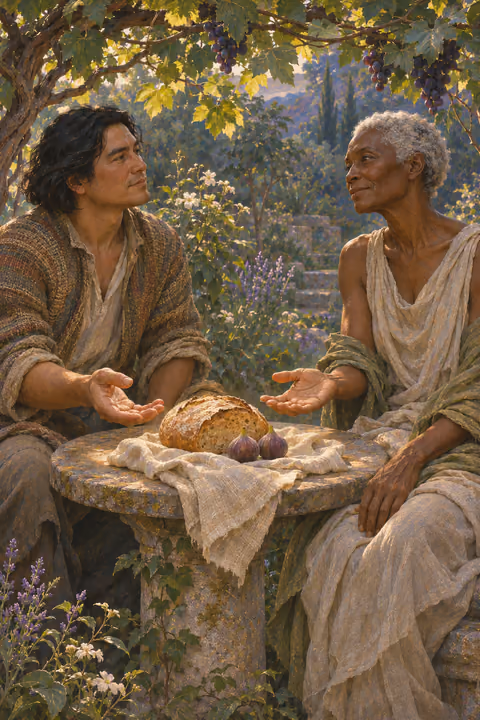
It's time to give and to share the blessings within your reach. Generosity can take the form of resources, time, listening or knowledge, according to what you are able to give.
Adverse nuance
Closing your hand can block the exchange you long for. Share what you can offer, without turning help into a debt or giving until you are left without what you need.
General reading
The Open Hand invites you to share. Sometimes what is needed is material help; at other times, a word, a presence or a piece of knowledge that seems small to you and may be valuable to someone else. Giving requires recognizing both what you have and your limits.
In love, it favors showing affection through gestures the other person can receive freely. At work, it invites you to share information and recognize what others contribute. With money, it allows you to help without compromising your own needs or expecting emotional repayment. In health, it points toward offering support and also making time for your own care. In the family, it asks for attention and chores to be shared out. In your studies, it favors teaching what you've learned and learning by sharing. In travel, it invites a spirit of solidarity that respects the agreements and the resources at hand. Open your hand in measure: generosity flourishes when it is free, concrete and not trying to buy closeness.
In the cross
What this card says in each of the five positions.
-
1 Present
There is something you can offer that deserves to circulate. Notice where your help would be useful, and how much time, attention or resources you can share without abandoning your own needs.
-
2 Past
A generous gesture, received or offered, may be holding up the situation. Remember its value without turning it into an eternal obligation or using it to measure who has more right to be heard.
-
3 Adverse conditions
Exchange gets difficult when you expect to receive without taking part, or when you give to get a particular response. Look at the intention and the measure of your help, without confusing openness with obligatory sacrifice.
-
4 Favorable conditions
Working in your favor is a willingness to share freely and concretely. Help that respects the means of the one who gives and the autonomy of the one who receives can open a space of trust.
-
5 Outcome or future
If generosity circulates without impositions, trust can grow and the situation can become easier to bear. The response doesn't have to come from the same person or take the shape you imagined.
Left and right
In the twelve houses only, this card changes with the side of the major arcana where it lands.
-
On the left
Generosity starts from you. In the matter of this house, you are the one who gives, shares or makes something available. Notice what help you can offer freely and in measure, without expecting the gesture to buy affection, acceptance or a particular response.
-
On the right
Generosity comes toward you. You may find help, a gift or a willingness to share in the matter of this house. Receive with gratitude and look over the conditions if there are any; accepting support doesn't oblige you to hand over your autonomy.
-
Difficulty on the left
You may be holding back help you could give, or giving with expectations you don't voice. Acknowledge your limits and share honestly, without making the gesture a way to control the other person.
-
Difficulty on the right
The help you are hoping for may not come the way you wish, or may come with conditions you need to review. Gratitude doesn't require accepting everything; make clear what is being offered and what is expected in return.
In the twelve houses
What this card says depending on the house where it lands.
-
1 Why you came, or what is nearest
What you're asking about brings help and the willingness to share to the foreground. A generous gesture may matter in what is nearest. Notice what is needed and what can circulate freely, without turning support into an emotional debt.
- On the left
- It's up to you to offer help in the matter you're asking about. Share what is within your reach, without demanding a particular response.
- On the right
- Someone may offer you help with your question or with a need close at hand. Take what is useful and make its conditions clear.
-
2 Money
Money may circulate through help, a gift or a contribution. Generosity needs a measure that looks after the needs of each side. Make clear how much is being offered and whether it's meant to be paid back, so that goodwill doesn't end in misunderstandings.
- On the left
- You offer money or material help within your means. Tell a gift apart from a loan, and keep what you need to live on.
- On the right
- You may receive money or support for an expense. Check its scope and the agreements before counting it among your available resources.
-
3 Siblings, in-laws and studies
Between siblings and in-laws, sharing time, information or concrete help can strengthen how you get along. In your studies, generosity shows in teaching, explaining or sharing resources. Make sure the support lets the other person learn and take part, without replacing the responsibility of the one receiving it.
- On the left
- You help siblings or in-laws, or share knowledge and study materials. Offer something useful without deciding for the other person.
- On the right
- A sibling, an in-law or someone connected to your studies may give you support. Make good use of the help while still doing your own part.
-
4 Parents, in-laws and home
With parents and in-laws, help can take the form of presence, chores or resources. At home, it helps to recognize what needs attention and how to share it out. Generosity finds its place best when each person's means are taken into account and no one is left having to hold everything up.
- On the left
- You give time, resources or care to your parents, your in-laws or your home. Say clearly what you can sustain, and share the responsibilities.
- On the right
- You may receive help from your parents or in-laws, or support for your home. Thank them for the gesture and talk about the real needs.
-
5 Romance, children and pets
In romance, gestures of affection favor a meeting that stays free. With children and pets, sharing time and care has concrete value. Look at the need you are meeting: a gift doesn't replace presence, and giving shouldn't become a demand for affection.
- On the left
- You offer affection in a romance, or give time and resources to children or pets. Care for them without turning your giving into an obligation to respond.
- On the right
- You receive an affectionate gesture in a romance, or help with looking after children or pets. Value the help without reading into it promises that haven't been made.
-
6 Work or health
At work, sharing information and tasks can lighten a load. In health, help takes the form of company and support to keep up care. A generous disposition needs to respect each person's strength and responsibilities, so that working together doesn't end in exhaustion.
- On the left
- You help with a work task or support someone's care. Offer concrete help that fits your own strength.
- On the right
- Someone may help you at work or support your care. Let the support ease a need without handing over all your decisions.
-
7 Your partner, or the chance of one
In an existing relationship, generous gestures favor mutual care when they can be given freely. If you want a partner, openness makes meeting easier and lets you see how affection flows. Tell generosity apart from the effort to buy closeness or secure a commitment.
- On the left
- You make a caring gesture toward your partner or someone you're getting to know. Share without trying to get love in return.
- On the right
- Your partner, or someone with whom a bond could grow, shows you generosity. Watch whether it continues before assuming a commitment.
-
8 The unforeseen
A chance for help you hadn't imagined may appear, or a need to share that had gone unnoticed. The subject depends on your question. Pay attention to that exchange without taking it for granted or turning a pleasant surprise into an obligation for either side.
- On the left
- You discover an unforeseen need and can offer something to meet it. Check the measure of your help before committing.
- On the right
- Someone may give you help you didn't expect in the matter you're asking about. Acknowledge the gesture and find out what support it really offers.
-
9 Any subject
In the area the reading points to, generosity invites you to recognize what can be shared and what you need to receive. Exchange becomes more fruitful when it is free and concrete. Watch the intention and the measure, without using help to impose closeness or decisions.
- On the left
- In this matter, you are the one offering time, resources, listening or knowledge. Share according to your means and with a clear intention.
- On the right
- In this matter, someone else makes something available to you. You can accept what serves you and talk through any conditions attached.
-
10 Work and profession
In work and career, sharing experience, recognizing contributions or opening an opportunity can favor growth. Help keeps its value when it doesn't demand personal obedience in return. Make clear the responsibilities that come with the support, and respect the merit of everyone involved.
- On the left
- Through your work or experience, you open an opportunity, teach or back someone. Avoid turning that support into a debt of loyalty.
- On the right
- Someone from your work or professional world may offer you backing or an opportunity. Weigh its scope and the responsibilities it involves.
-
11 Wishes and aspirations
A wish can find better conditions when there is a willingness to share and to receive support. Recognize which contributions would help make it real and which ones you can sustain. Generosity opens possibilities, though it doesn't guarantee your aspiration will be fulfilled or oblige others to make it come true for you.
- On the left
- You share time or resources in a purpose that excites you. Give in measure, without expecting your giving to buy the result you want.
- On the right
- Someone may support an aspiration of yours with resources, contacts or presence. Make the most of that chance while keeping your responsibility to take part in how it develops.
-
12 Obstacles and solutions
A difficulty can be eased by help that meets the concrete need. Notice whether the exchange has closed down, whether it's hard to ask for support or whether the giving goes beyond the strength available. Sharing clearly can open a way; giving with hidden conditions or to the point of exhaustion can complicate it.
- On the left
- You can offer help to resolve the difficulty. Be specific about what you contribute and how far you go, so you don't take on everything.
- On the right
- Someone else's help may make a solution easier. Check whether it meets the need and whether its conditions let you accept it freely.
Common questions
What does The Open Hand mean on the left or on the right?
In the twelve-house spread, on the left generosity starts from you: you are the one who gives, shares or makes something available. On the right generosity comes toward you: you may find help, a gift or a willingness to share in the matter of that house.
What does The Open Hand mean in love?
It favors showing affection through gestures the other person can receive freely. In an existing relationship, generous gestures favor mutual care; tell generosity apart from the effort to buy closeness or secure a commitment.
Is The Open Hand a positive or negative card?
Its core message is to give and share the blessings within your reach, according to what you are able to give. Its adverse nuance appears when closing your hand blocks the exchange, or when help turns into a debt or into giving until you are left without what you need.